
When Claude Opus 4.5 Died in 3 Days: My AI System Survived
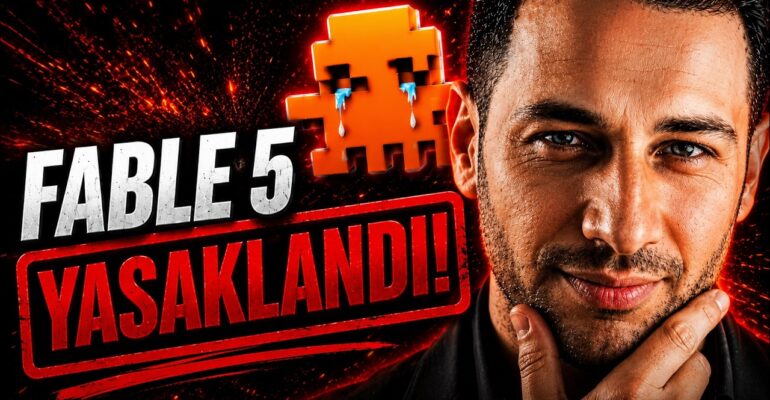
 admin
admin I woke up to find my AI system’s “brain” had been disconnected overnight. No warning, no gradual phase-out—just gone. Anthropic’s Claude Opus 4.5, which I had been running as the core engine for my Jarvis automation system, had been shut down by government order. The model had been publicly available for exactly three days.
This wasn’t a technical glitch. This was a US Commerce Department directive that forced Anthropic to cut off access to hundreds of millions of users worldwide. If you’re building your online business on AI automation, what happened to me contains a lesson worth thousands in lost revenue.
Key Takeaways
- Claude Opus 4.5 launched publicly on June 22 and was suspended within 72 hours by US government order
- The shutdown affected “hundreds of millions of users” who lost access overnight
- Only Opus 4.5 and a related model were shut down—other Anthropic models kept running
- My Jarvis system automatically failed over to Claude Opus because I never build on a single model
- The core lesson: fall in love with your system architecture, not any specific AI model
What Actually Happened: The 72-Hour Model
I had recorded a video just two days earlier showing exactly how my Jarvis system worked. I demonstrated how Opus 4.5 served as the “brain,” automatically handling tasks for my business operations. That video went live on June 22. By the following night, the model was dead.
At around 6:15 PM, a letter arrived from the US Commerce Department to Anthropic’s CEO. The content was stark: this model could not be used by anyone outside the United States, nor by foreign nationals inside the country. This was export control applied to an AI model in real-time.
Anthropic faced two choices. They could either block users one by one based on location and nationality—a logistical nightmare—or shut down access entirely, including for their own foreign employees. They chose the nuclear option to comply. Opus 4.5 went dark globally.
Here’s what surprised many observers: only Opus 4.5 and one related model were shut down. Claude Opus and Anthropic’s other models kept running normally. The targeting was surgical, which made the government’s reasoning even more interesting to analyze.
Two Sides of the Shutdown Story
I’ve looked at both arguments honestly, and I’ll lay them out for you to judge yourself.
The government’s position: According to one administration official, another company claimed to have found a security vulnerability in Opus 4.5—a way to bypass the model’s safety guidelines. This triggered national security alarms. Notably, how this was accomplished was never explained publicly, and I won’t speculate on details that weren’t disclosed.
Anthropic’s response: The company pushed back hard. They argued this was a narrow, specific vulnerability, not a universal flaw. The same capabilities, they noted, already exist in competing models on the market—including the latest GPT release. Cybersecurity professionals use these tools daily for defensive purposes. The model had already been distributed to hundreds of millions of people. Rolling it back, Anthropic contended, was the wrong move. If this standard were applied consistently, no new AI model could ever launch.
There’s an irony here that hasn’t escaped my attention. Anthropic has built its brand around being the “most safety-focused AI company.” Now that exact safety emphasis was being weaponized against them. The narrative they cultivated became the rope they were hanged with.
The Real Cost: What This Means for Your Business
Here’s where I get direct with you about money and risk.
Imagine you built your entire content production and automation workflow on a single AI model. Every article, every product description, every customer email, every automation trigger—flowing through one engine. Then one night, that engine disappears. No transition period. No migration path. Just stopped.
That’s precisely what happened to thousands of businesses when Opus 4.5 went dark. Their operations flatlined because they had centralized everything on a single point of failure.
I tested my own system the morning after the shutdown. I typed a simple greeting to Opus 4.5 through my interface. The response was silence—the model was inaccessible. But my Jarvis system was still running. It had automatically failed over to Claude Opus, the next model in my configuration. I didn’t lift a finger.
This isn’t luck. This is architecture.
How I Build AI Systems That Survive Model Deaths
I’ve said this repeatedly on my channel: never marry one tool, never marry one model. I construct every system I deploy to run across multiple models simultaneously.
When Opus 4.5 died, my system didn’t panic. It didn’t send me emergency alerts at 3 AM. It simply routed requests to the next available model. One goes down, another takes over. The transition is invisible to the end user and seamless to the business process.
The agent systems I’ve shared with my community were designed with exactly this scenario in mind. When the shutdown news broke, these systems automatically reconfigured themselves in the background. No manual intervention required. The capabilities my users had downloaded continued functioning, just with a different engine under the hood.
The lesson crystallized for me years ago but confirmed brutally this week: don’t fall in love with a model. Fall in love with your system. Build your model as a replaceable component.
What Comes Next for AI Regulation
Anthropic has stated they’re appealing the decision and will share more details soon. The model isn’t permanently killed—it’s suspended. It could return. But the precedent is what keeps me up at night.
This is the first time a government has intervened to shut down a major AI company’s strongest models with this level of directness. I don’t believe this will be the last. AI has stopped being treated as mere technology. It’s becoming a matter of state, a geopolitical chess piece.
I’ve seen comments asking whether these tools are actually powerful or useful. My response: if governments are actively blocking them, there’s something significant happening that critics haven’t grasped yet. The people calling these models overhyped aren’t the ones governments are scrambling to restrict. That disconnect tells its own story.
FAQ
What exactly was shut down and when?
Anthropic’s Claude Opus 4.5 was suspended by US government order in June 2024, approximately 72 hours after its public release on June 22. Only Opus 4.5 and one related model were affected. Other Anthropic models including Claude Opus continued operating normally.
Why did the US government force the shutdown?
According to a US administration official, another company reported finding a security vulnerability in Opus 4.5 that could bypass the model’s safety guidelines. The Commerce Department classified this as a national security concern and imposed export controls restricting access by non-US persons and foreign nationals.
How can I protect my business from sudden AI model shutdowns?
Build multi-model architectures rather than depending on single models. Configure your automation systems to automatically fail over to alternative models when primary options become unavailable. Treat AI models as interchangeable components within a resilient system design.
Is Claude Opus 4.5 permanently discontinued?
No—Anthropic has described the model as “suspended” rather than terminated, and has indicated they are appealing the decision. However, no timeline for potential reinstatement has been provided, and the regulatory precedent suggests similar interventions may occur with future powerful models.
Conclusion
Anthropic’s most capable model lived for three days before a government directive extinguished it. For hundreds of millions of users, access disappeared overnight. For businesses built entirely on that single model, operations stopped cold.
My Jarvis system kept working because I had refused the seduction of model loyalty. The architecture mattered more than any individual component. That’s the expensive lesson this episode teaches—expensive for those who learned it the hard way, and potentially free for those who act on it now.
I’ve documented step-by-step how to build these resilient, multi-model agent systems in the resources I share with my community. The same automation frameworks that silently adapted to Opus 4.5’s death are available for your own e-commerce and content operations.
What’s your take on who was right in this shutdown—the government’s caution or Anthropic’s pushback? I read every comment.
Watch the full video (in Turkish — English subtitles available):
Tools & Community
- TurkoLister — the AI listing tool I use to turn Amazon products into optimized eBay UK listings in about 60 seconds (from £4.99/month, £1 one-week trial).
- AI & E-commerce Community — my Turkish-speaking community ($19/month) with weekly live sessions.
- Subscribe on YouTube — new experiments every week.
Free guide + training
Enjoying this guide? Get the free AI Automation Playbook
Join readers receiving one practical AI & online-business playbook from our sister academy Okyanusi — the team behind Digital Market Mentoring. Free PDF, instant access after email confirmation.
Want the full step-by-step training? Explore Okyanusi courses →